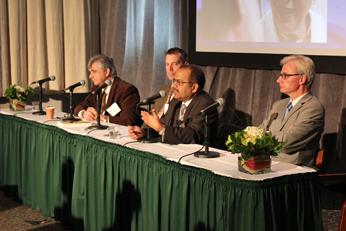
This is an exciting time for lymphoma research in general and follicular lymphoma patients in particular. There are many ongoing clinical trials and studies of agents that may have application to patients with follicular lymphoma. It is important that patients with follicular lymphoma and their physicians keep current, investigate options, and consider participating in clinical trials. Clinical trials not only foster developments for patients in the future, but many provide the best options for patients today.
Pathway inhibitors: There are many disrupted enzymatic pathways in the cells of follicular lymphoma patients. Researchers are devoted considerable attention to looking at pathways that allow tumor cell to survive and grow and developing agents to inhibit some of these abnormal pathways. These agents enter a tumor cell through the B-cell receptor on the cell surface. Some examples include Bruton’s tyrosine kinase inhibitors, phosphoinositide 3-kinase (PI3K) inhibitors, and many others.
Immunomodulatory drugs: Immunomodulatory drugs such as lenalidomide (Revlimid) are being studied on follicular lymphoma. Lenalidomide has been used on other types of lymphomas in the relapsed setting, and is being studied as a front-line treatment, maintenance therapy, and in the relapsed setting for follicular lymphoma.
mTOR Inhibitors: Another class of agents called mammalian target of rapamycin (mTOR) inhibitors, which include drugs called temsirolimus (Torisel) and everolimus (Afinitor) Temsirolimus has demonstrated efficacy in the relapsed setting for follicular lymphoma.
Many clinical trials are exploring using different combinations of drugs and agents: For example, there are studies underway to see whether any agent could be added to rituximab maintenance to keep patients in remission longer. A new front-line clinical trial includes lenalidomide, bendamustine, and bortezomib (Velcade). This group is also studying different combinations of bendamustine with rituximab, such as bendamustine with bortezomib and rituximab. Researchers also are exploring different maintenance regimens.
Vaccines: Vaccines have been effective for some types of cancer. Until recently, the track record was not good for lymphoma vaccines with booth the Genitope and Favrille clinical trials failing. However, the BiovaxID vaccine from Biovest had very impressive results in a Phase III study with virtually no side-effects. The BiovaxID vaccine has been approved in Europe, but not in the United States. 429 Vaccination with IgM but Not IgG Idiotype Prolongs Remission Duration In Follicular Lymphoma Patients.
Biomarkers: Apart from investigating new agents, researchers are investigating novel biomarkers for predicting a patient’s outcome or prognosis. Gene expression profiling is being looked at not only on the tumor cell but in the microenvironment to see what in the genes, or the cells in the environment, cause a cancer cell to grow. It appears that if you have a lot of T cells, for example, your prognosis may be better than if you have a lot of monocytes or macrophages. Researchers are also looking at lymphocyte counts in patients with follicular lymphoma, which may also be a prognostic indicator.